Login
Login


How to successfully renovate your investment property

Sometimes a renovation feels a bit like Groundhog Day – the same stuff over and over again with very little change.
Don’t get me wrong, I get real satisfaction out of renovating, but for me it’s a process. I have a goal in mind and from experience I’m confident that I can achieve it.
By ‘Groundhog Day’ I’m referring to the way in which I get scale and efficiencies from the renovations I undertake.
I use the same type and colour of paint each time; I also don’t deviate from the colour and type of carpet I lay.
In addition, I always purchase and install the same lighting, tapware and light switches in all the projects I undertake. I also try to use the same type and colour of tiles, whether in the bathroom or kitchen splashback.
Call it economies of scale, or just call it good common sense, but outside of the materials I use to renovate, I try to keep the same timelines and priorities – I know where to start a renovation, what mini-projects I need to undertake, and in what order to get the job done.
It’s the same – time and time again. And this is not an invention of my own; it’s something I’ve learned from our buyer’s agent Steve Waters from the Right Property Group, who has a lot more renovation experience than me.
The point I’m making here is that renovating is a numbers game. It’s not emotionally charged, and the satisfaction for an investor should come from the value created and cash flow generated.
Property investors need to go into any renovation with a practical approach: what do you need to do to add value to the property by spending as little as money as possible?
Yes, it’s okay to be proud of good workmanship and a job well done. It’s even okay to get the feeling that the renovated property is somewhere that you’d be happy living. But outside of the satisfaction of completing a renovation, it needs to be framed by your investment goals.
Keep focused
If you’re a property investor you need to be detached; if you get too emotionally connected with a renovation it will cloud your judgement, and you’re more likely to overspend or overcapitalise on the property.
And it’s easy to get carried away when renovating. If you’ve got a TV you’ve no doubt been bombarded by the myriad shows around renovating, and the emphasis placed on soft furnishings, the latest in outdoor patio design and all the great products on the market.
I like these shows, but I watch them in the context of what they are. If you’re renovating your principal place of residence, these shows often have some great tips to make your home more liveable and practical, but they usually come with a pretty big price tag.
Free investor loan check
Better property decisions start with smarter lending.
A free 15-minute finance check for property investors.
What are your lending goals?
Choose a goal to request a callback.
Ready to talk?
Book a 15-minute call →Finni Pty Ltd · Australian Credit Licence 384324 · Privacy
Property investors need to go into any renovation with a practical approach: what do you need to do to add value to the property (both capital value and rental return) by spending as little as money as possible?
Put simply: why spend $6,000 on a new kitchen when a $3,000 kitchen will elevate your property to the same capital value, and also help you secure the same weekly rent?
This is how you must view every aspect of your renovation. It’s not always easy, and you’ll sometimes need help to get it right.
I always work closely with local agents when assessing a renovation to determine the market appetite for the property, what my maximum rent will be and what competitive products are on the market in the area.
For example, if similar properties – the same quality of property, same number of bedrooms and bathrooms, similar living space, front yard and backyard and parking – in the area are generating $350 a week rent, then I’ll look to spend as little as possible to create the same product.
These competitive properties will also have a market value, so I’ll also use that as my benchmark for renovating and seek to bring my property on par, or better, by spending as little as possible on the renovation.
You’ll need to do your research to get your variables and parameters in place, and create a clear picture of what the end goal is in terms of rental and capital value. That’s your first integral step.
From there, you’ll need to draw on all your resources, skills and capabilities to undertake a smart, cost-effective renovation.
For our latest renovation property in Springfield, Queensland, we set ourselves a budget of $10,000 to elevate the property.
At a $270,000 purchase price we secured the property well under market value, however there was an opportunity to also create a product on par with other higher-value properties in the area, with the aim of increasing its capital value as well as rental yield.
The project’s now done and the tenants have moved in – and they are great tenants.
Top tenants
As downsizers, the tenants were looking to stay in their local area but in a smaller, more manageable home. Our three bedrooms appealed, so did the outdoor space we created. They also appear house-proud, wanting to add a few things to make the home more liveable for them, like covering part of the back pergola as well as installing a particular type of blinds, which I was happy to pay for.
I also offered to pay for some plants for them to do some gardening, which they were quite excited about. It’s important for the tenants that the house feels like a home and I’m confident they will be good, long-term tenants.
Unlike some of the properties in our portfolio, this property firmly sits in a traditional owner-occupier area, which generally means you get a slightly different type of tenant – ones that traditionally stick around a little bit longer and have different needs.
Being in a traditional owner-occupier area also means it’s good for resale – attracting both homebuyers and property investors.
However we don’t intend to sell; this property will sit in our portfolio and grow in value over time.
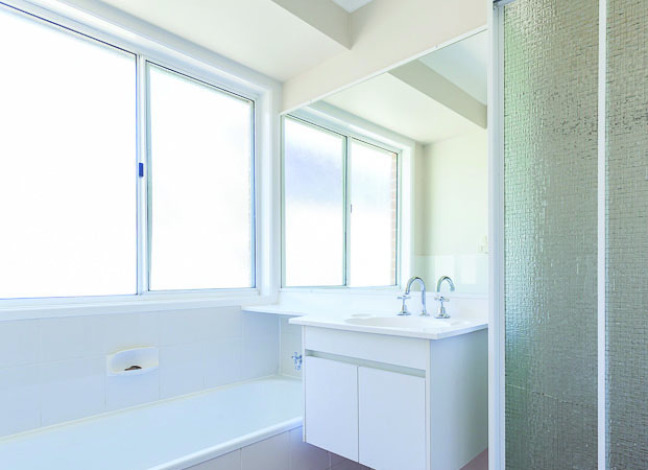
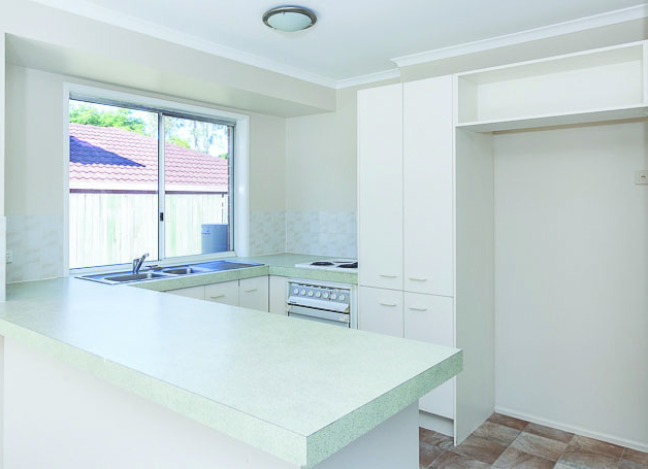
All up we spent $9,977, which includes all the work associated with reconfiguring the living space (as reported in the September issue), essential repairs and maintenance, improving the kitchen and bathrooms with new tapware and other works, new flooring throughout (carpet and vinyl), repair of back pergola, new blinds plus a fresh coat of paint throughout.
We come in under budget, which I was happy about. This renovation cost also includes the $500 I’m spending on plants for the tenants to spruce up the yard, giving a greater curb appearance to the property.
As this was a remote renovation, my time directly on tools was significantly limited. All work was undertaken by external suppliers, with prices secured that all investors can achieve with some good research and negotiation.
So how happy are we with the finished project?
Renovation results
Considering comparable properties in the area that recently sold or are currently for sale, a conservative valuation on the property, should we sell it, would be around the $330,000-$340,000 range.
Put in the context that we paid $270,000 for this property in April, and that’s a great result.
How much of this value increase is down to our ability to renovate quickly and to a budget compared to how well we purchased is a little difficult to determine.
I’m comfortable with saying that by spending $10,000 on a very smart and cost-effective renovation we’ve added at least $20,000 to the property’s value. On that basis, we probably secured this property around $40,000 under market value – which would align with the RP Data property valuation at the time of purchase.
It’s an inexact science; however the overall result is that we spent $270,000 on the property, plus just shy of $10,000 on renovation. With an initial rent of $350 per week, that would give a yield of 6.5 per cent – which is not bad.
I’ve calculated this yield by comparing the annual income of the property (its yearly rent) against the cost to purchase the asset plus renovation expenses, which is considered a universal way to calculate yield.
This is an absolute number, however it doesn’t account for other costs to purchase the property such as stamp duty, mortgage duty, pest and building reports, conveyancing, buyer’s agency fee, plus mortgage holding costs during the renovation period. It also looks at the total revenue, without the deduction of management fees.
I’m always a little nervous when people talk of rental yields. It’s a common currency for assessing the performance of an asset, however there are a number of ways to calculate it.
The property purchase price vs income is the simplest way, however you need to be clear that should you calculate yield this way, you may create a disjointed view on a property’s performance.
Renovating is a numbers game. It’s not emotionally charged, and the satisfaction for an investor should come from the value created
A number of property experts I chat with argue the only true way to calculate yield is to include all purchase costs and income less agency fees, whereas others claim a simple calculation of asset purchase price over income is sufficient.
My recommendation is not to dwell too much on yield and look at the bottom line of each property and your entire portfolio. After all costs, expenses and revenue are considered you are going to be either cash positive or cash negative.
Your capacity to hold property and service debt should you have negative cash flow will dictate your strategy, as too will being cash positive. But I’ll leave this topic for another column.
For us, this property is a good performer and is an excellent addition to our portfolio. Not only has it given us another level of area diversification, it’s offered a pillar of strength to our income but more importantly, excellent equity gain – cash we can extract to finance our next purchase!
Check in next month when I unveil our next purchase – it’s a great story and one not to be missed – but that’s all I’m going to say for now.
I hope you enjoy our Investment in Action series as much as I enjoy sharing our experience building our property portfolio. Please email me at [email protected] should you have any questions on this project or if you would like additional details on our property portfolio in general.
Want to see more stories from trusted news sources?
Make Smart Property Investment a preferred news source on Google.
Click here to add Smart Property Investment as a preferred news source.