 Login
Login


From desks to dwellings: The conversion play gaining momentum
Repurposing underutilised office assets into targeted residential developments will give investors a faster, more sustainable pathway to long-term capital growth in supply-constrained, amenity-rich locations.
Repurposing underutilised office assets into targeted residential developments will give investors a faster, more sustainable pathway to long-term capital growth in supply-constrained, amenity-rich locations.
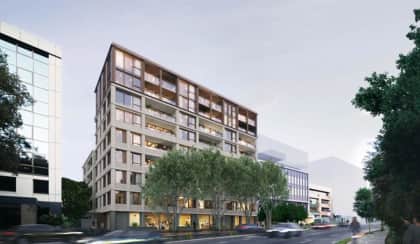
In response to low housing stock, commercial property firm Realside has converted office space into a targeted living community for retirees looking to downsize, increasing supply and freeing up larger homes for the market.
The firm took on the task to convert a former office building in Greenwich into a range of luxury single- and multi-bedroom apartments designed for retirees.
With over 30 per cent of the region's population being aged over 55, Realside chief executive officer (CEO) Linda Rudd said that the decision to convert an office asset into a residential dwelling was driven by the area's low supply and dwindling demand for office space.
“Our research showed that a lack of options meant that individuals or couples are staying in houses with surplus bedrooms and size, due to a lack of options for relocation in the same area,” Rudd said.
“It is easy to understand why residents want to stay in this amenity-rich area, but this cohort needs options.”
Rudd said research in the area found that retirees seeking to downsize to an appropriately sized dwelling had left them in homes much larger than necessary for their lifestyle.
If there were a wider array of homes that fit retirees’ needs, Rudd said more properties would be available on the market for growing families looking to upsize.
She said the concept of converting a commercial asset could be adapted to serve a variety of demographics, depending on the area's needs.
She added that by avoiding demolition and starting from scratch, projects could be delivered faster and more sustainably.
“Effectively, we retain the existing concrete structure and basement areas, which means we avoid part of the demolition process, along with part of the construction process.”
“We feel that you can achieve more environmentally in doing so, and that the pursuit of a newly constructed six-star building ignores the embodied carbon that is produced during the construction phase.”
“This took extra time, but it was time well invested with the outcome being that we can deliver a sustainable residential development that will deliver energy efficiency on completion, while also having saved the equivalent of 125 households’ emissions per year.”
Free investor loan check
Better property decisions start with smarter lending.
A free 15-minute finance check for property investors.
What are your lending goals?
Choose a goal to request a callback.
Ready to talk?
Book a 15-minute call →Finni Pty Ltd · Australian Credit Licence 384324 · Privacy
She said that if developers were encouraged to take on this type of conversion project, it could become a more feasible way to increase housing stock at all level from luxury to affordable dwellings.
“What should be considered is incentivising developers to pursue projects such as the regeneration of buildings that may otherwise become redundant.”
“There would be countless examples in cities around the world of empty buildings no longer fit for purpose.”
In terms of opportunity, she said that investors would see more stock on the market but would need to do their due diligence and weigh the converted asset up against other opportunities on its merits.
“The process is the same as it is for any other residential development.”
“Our belief is that given the scarcity of developments such as this, the capital growth looking forward is compelling,” Rudd concluded.
Want to see more stories from trusted news sources?
Make Smart Property Investment a preferred news source on Google.
Click here to add Smart Property Investment as a preferred news source.