 Login
Login



Lifestyle appeal fuels yields in desirable coastal regions
Investors have their sights on desirable coastal regions as lifestyle appeal fuels demand for rentals, driving strong yields.
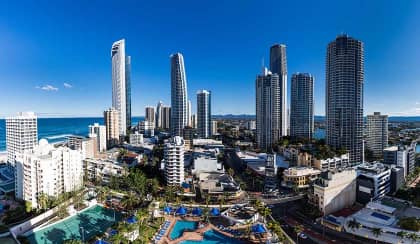
New data showed that buyers have been increasingly attracted to the lifestyle appeal of coastal regions, with values rising over the last few years.
According to new Cotality analysis, flood-affected pockets within coastal markets have been recovering with significantly more momentum than inland areas following the 2022 events.
The data found affected coastal regions in South-East Queensland (SEQ) typically rebounded within 18 months, with values currently sitting 31 per cent above pre‑flood levels.
Contrastingly, many flood-impacted inland towns in Northern NSW were found to be below their January 2022 values four years after the event.
First National Surfers Paradise principal, Rob Rollington, said there had been a strong migration to his area in the past five years, with the momentum still going strong.
“There’s been a lot of interstate migration, a lot of internationals – they went to all different parts of Australia, but I feel they’re migrating back towards the south-east,” he told REB.
He said investors accounted for a large share of the activity, chasing strong rental yields, while tenants accounted for much of the recent population growth.
“People relocate their lives here, and they’re willing to pay a thousand, two, three, four thousand a week for premium properties close to the beach.”
“There’s very strong demand in those things, that’s made the investors very interested to buy these properties because you’re getting better than bank interest returns in most cases.”
Cotality head of sustainability solutions, Richard Griffiths, said the report’s findings showed lifestyle-based demand was strongly driving value, despite past events showing the significant effects of natural disasters.
“Our analysis shows that communities with deeper buyer demand, stronger amenities and higher value housing stock tend to bounce back far quicker when they have sustained significant physical damage from an event.”
According to the data, coastal suburbs such as Paradise Point, Burleigh Waters, Broadbeach Waters and Hope Island were leading the recovery.
Free investor loan check
Better property decisions start with smarter lending.
A free 15-minute finance check for property investors.
What are your lending goals?
Choose a goal to request a callback.
Ready to talk?
Book a 15-minute call →Finni Pty Ltd · Australian Credit Licence 384324 · Privacy
Similarly, Hollywell and Paradise Point recovered within eight months and have been sitting 32 per cent above pre-flood values.
Rollington said that much of the appeal of his region was its city-like feel without the usual busyness, as well as its proximity to the water.
“We’re blessed with all the beaches and coastlines that, even for a million-odd population, there’s enough room for everyone to be on a beach without being too crowded like Bondi.”
“A lot of people say we now have the amenities and the options for commerce and a lot of high-quality eateries and shopping centres.”
In stark contrast to SEQ coastal regions, inland housing markets such as Lismore, Mullumbimby and Ballina saw far less growth in values.
According to the data, the inland markets have failed to recover to their pre-flood values, with the combined group of regions standing 5.58 per cent below their levels in early 2022.
Griffiths said that the NSW markets had failed to bounce back as they didn’t have the same demand as the SEQ coastal regions.
“The combination of extensive damage and persistent risk of disruption in these areas isn’t compensated for by that same lifestyle demand.”
Griffiths added that as climate events became more frequent, the gap in recovery between desirable coastal areas and rural markets would only widen.
“What also remains to be seen is whether more frequent and severe natural disasters may also, eventually, start to negatively impact the rate of recovery even in premium locations,” Griffiths concluded.
Want to see more stories from trusted news sources?
Make Smart Property Investment a preferred news source on Google.
Click here to add Smart Property Investment as a preferred news source.