 Login
Login




Melbourne: The new gateway for global investors
Melbourne’s commercial market has begun to turn around, with the Victorian capital shaping up as a hotspot for domestic and global investors due to its pricing clarity and income visibility, according to recent data.
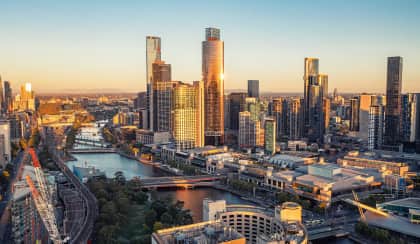
According to Savills’ Mispriced: Melbourne’s Capital Reset report, the city underwent a deeper price adjustment than other markets, leading to greater transparency in entry and clearer risk assessment.
The report found that, with global real estate investment tipped to rise to over $1 trillion in 2026 and investors chasing markets with pricing clarity and liquidity, Melbourne was best positioned to capitalise on the enhanced interest.
While Victoria’s total investment turnover has been sitting below its long-term average, Savills state managing director for Victoria, Joe Phegan, said the market is now at a stage that historically marks the point at which capital begins to re-enter.
“Melbourne is a premium market where repricing has largely been absorbed, and income carries performance while values stabilise,” Phegan said.
“Investors, developers, and occupiers can lean into Melbourne’s structural strengths ahead of the next growth phase.”
The report found that investors have shown strong interest in the Victorian capital, which ranked among APAC’s top three preferred investment locations, behind Tokyo and Sydney.
Savills national head of capital transactions and advisory, Ben Schubert, said the most notable change is not the surge in volume but a shift in how capital is deployed.
“Investors are underwriting selectively, favouring structures and assets where repricing has already occurred and income is visible,” Schubert said.
“We have seen this pattern in other global gateway markets such as New York, San Francisco, and Paris – once price discovery is fully advanced, investors start to re-engage.”
Offices
According to the report, A-grade office yields in Melbourne’s CBD have expanded by over 210 basis points, outperforming Sydney’s mark of 180 basis points.
Savills head of research Katy Dean said this meant there was a significant opportunity for investors to capitalise on the office shortfall, with investment turnover of 2.45 per cent of market size, well below the state’s 10-year average.
Free investor loan check
Better property decisions start with smarter lending.
A free 15-minute finance check for property investors.
What are your lending goals?
Choose a goal to request a callback.
Ready to talk?
Book a 15-minute call →Finni Pty Ltd · Australian Credit Licence 384324 · Privacy
“Office turnover is currently running at around half of its long-term average,” Dean said.
“These are textbook early-cycle re-entry conditions, and we will see selective capital move first, with broader volumes recovering later.”
The report found that transport-linked CBD precincts in Melbourne’s East End had attracted the strongest level of tenant demand.
Fringe suburbs such as Cremorne, Collingwood, and South Yarra continued to attract occupiers seeking to leverage spaces for conversion and adaptive reuse.
Industrial and logistics
The report found that Melbourne had established itself as an industrial gateway market, supported by Australia’s largest container port and freight infrastructure.
Due to the interest in the city’s industrial market, rents in Melbourne’s north have increased by 97 per cent, while the west and south-east also outperformed the national average of 65 per cent.
Dean said that Melbourne showed signs of an industrial market driven by strong fundamentals.
“Melbourne’s industrial market is underpinned by its location as the primary distribution gateway for south-eastern Australia, with structurally embedded rental growth supporting long-term cash flows,” she said.
“Prime west Melbourne industrial offers roughly half the entry cost of Sydney, with an income yield premium of 80 basis points.”
With investors prioritising protection from downside risk while chasing medium-term rental growth, the report found that capital would likely be concentrated around core logistics and infill assets, particularly in the south-east and western precincts.
Additionally, living assets accounted for more than a fifth of Australian real estate investment in 2025, nearly double its historical average.
Phegan said the boom seen across the asset type was supported by increased capital backing for development and platform opportunities.
“This investor conviction is underpinned by Melbourne’s population growth, rental affordability and platform-scale opportunities,” Phegan concluded.
Want to see more stories from trusted news sources?
Make Smart Property Investment a preferred news source on Google.
Click here to add Smart Property Investment as a preferred news source.