 Login
Login




WA, SA the last regional markets standing as downturn spreads
Regional Western Australia and South Australia have emerged as the victors over the rest of the states, as the nationwide downturn spreads to jurisdictions outside capital city markets.
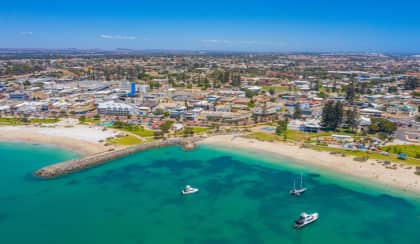
New data has shown that regional Western Australia and South Australia have outperformed the rest of the states in the last quarter, recording the strongest growth nationally.
According to the latest Cotality Regional Market Update, both states saw dwelling values increase by 2.1 per cent in the three months to July, despite a broader slowdown nationwide.
South Australia
In South Australia, Port Pirie led the results with quarterly growth of 6.7 per cent, while Murray Bridge grew by 3.1 per cent, and Whyalla was up 2.5 per cent.
Cotality’s head of research, Gerard Burg, said the state’s situation was unusual as the strongest growth came from smaller markets, rather than larger locations, with buyers opting for more cost-effective areas.
He said the data had primarily focused on the largest significant urban areas (SUAs) nationally, including Mount Gambier and Victor Harbor, but neither had particularly strong growth.
“Victor Harbor was up 0.9 per cent, and Mount Gambier was down 0.9 per cent for the quarter,” he told REB.
“So it’s actually been smaller localities within South Australia that’s really been the driver.”
Western Australia
In Western Australia, Kalgoorlie-Boulder and Geraldton recorded the strongest gains in Western Australia, at 6.4 per cent and 3.8 per cent respectively.
Burg said the state had consistently been the outperformer nationally, with the data reflecting that strong demand from Perth had tipped over into the regions.
However, he noted the strong performance had recently been shifting from the south-west region to other areas of the state as buyers felt the affordability pinch.
Free investor loan check
Better property decisions start with smarter lending.
A free 15-minute finance check for property investors.
What are your lending goals?
Choose a goal to request a callback.
Ready to talk?
Book a 15-minute call →Finni Pty Ltd · Australian Credit Licence 384324 · Privacy
"We’re no longer seeing growth concentrated in the lifestyle markets that benefited most from spillover demand we saw during the market’s prolonged upswing.”
“Instead, buyers are gravitating towards regional centres where their dollar stretches further, and local demand is supporting housing values."
Broader regions
Nationally, the regions proved to be more resilient than the capitals, with dwelling values easing by just 0.1 per cent in the quarter, compared with a 2.5 per cent decline across the capitals.
However, the regions have still been losing momentum, with the data showing that 47 of Australia’s 50 largest regional SUAs had slower growth compared to the previous quarter, while 22 recorded a decline in home values.
Burg said the regions were likely seeing a lagged effect from the national downturn, noting it usually took a while for interest rate rises to fully impact the economy.
“The fact that we now see at the national level this downturn has started for regional markets, it’s still quite a bit weaker than what we’re seeing in the capital cities, but there’s certainly a prospect for that to continue to build.”
Regional NSW and Victoria recorded the weakest conditions nationally, as softer conditions persisted in Melbourne and Sydney.
Across regional NSW, Coffs Harbour (-3.3 per cent), Goulburn (-3.2 per cent), and Nelson Bay (-3.0 per cent) led declines, while Geelong (-1.2 per cent) and Warragul -Drouin (-1.5 per cent) recorded the largest falls in Victoria.
Regional Queensland’s dwelling values were flat over the quarter, with values falling across the state’s south-east markets for the first time since early 2023.
The Gold Coast, Sunshine Coast, and Cairns all recorded declines of 0.8, 0.5, and 0.6 per cent respectively, offsetting gains in Maryborough, Gladstone and Townsville.
Burg said Queensland had emerged as a standout regional performer over the past few years, but there was now a more selective market emerging.
“As higher-value markets lose momentum and buyers become more cautious, we’re seeing demand swing to more relatively affordable regional centres.”
"Higher interest rates have reduced borrowing capacity, and buyers are more price-sensitive, so they’re looking for value areas, which has supported demand in regional centres such as Maryborough, Gladstone, and Townsville.”
Want to see more stories from trusted news sources?
Make Smart Property Investment a preferred news source on Google.
Click here to add Smart Property Investment as a preferred news source.