 Login
Login



WA agricultural buyers switch priorities
Rainfall has become the top of the shopping list for Western Australian farmland buyers, as market conditions soften and values begin to plateau.
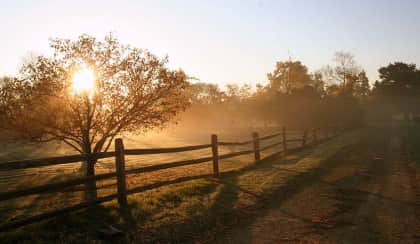
Rural farmland in Western Australia has followed the same trends as the state’s capital, with conditions slowing after years of values booming.
According to Peter Storch from Raine & Horne Rural Western Australia, the priorities of rural buyers had shifted.
After years of growth supported by corporate investment, favourable seasons, and strong competition, Storch said buyers had pivoted toward properties offering reliable rainfall, productivity, and value.
“Everybody was in a frenzy to procure land in a rising market. It’s been a happy time for WA rural real estate over the past 4–5 years,” Storch said.
“Land that was worth $2 million in 2020 is now worth $4–5 million. It has been significant growth.”
He said, similar to Perth, Western Australia’s regional and rural markets had begun to slow and recalibrate.
According to Cotality’s latest Home Value Index, dwelling values in the regional Western Australia market had declined by 0.2 per cent over the last three months, a significant change from a 16.7 per cent rise over the year.
He said buyers, particularly in the state’s rural property market, had become more selective and cautious rather than acting with urgency.
“We’ve plateaued now for the last six to eight months, and everyone’s just having a breather and seeing what will happen.”
He said that with values remaining resilient, buyers, ranging from neighbouring farmers to corporates and overseas investors, were becoming highly selective.
Stroch said the Wheatbelt region of Western Australia, 300km east of Perth, was an example of a market that has become more considered, as fewer farms become available.
“The Wheatbelt is a cautious market, with a wait-and-see buyer environment.”
“The federal budget hasn’t helped, along with three interest rate increases this year.”
Free investor loan check
Better property decisions start with smarter lending.
A free 15-minute finance check for property investors.
What are your lending goals?
Choose a goal to request a callback.
Ready to talk?
Book a 15-minute call →Finni Pty Ltd · Australian Credit Licence 384324 · Privacy
He said the selectivity wasn't limited to this region, with the trend emerging more broadly across the state.
Additionally, Storch said higher fertiliser and fuel costs, as well as interest rate movements, had created more caution.
Storch said that buyers had also placed a growing emphasis on properties with consistent rainfall prospects.
Following strong-yielding seasons in 2025, he said some producers were considering moving closer to Perth and to areas with more reliable rainfall than the Wheatbelt.
“Some areas also haven’t received as much rain this year as they did in previous years.”
According to Storch, the inconsistent rainfall had encouraged some farmers from more marginal cropping districts to consider properties closer to Perth and in higher-rainfall areas.
He recently showed a rural property to a farmer from the more marginal Wheatbelt country who was seeking rainfall.
“He’s in an area probably 300 kilometres east of Perth that is marginal cropping country and where rainfall is up and down.”
Despite developing a slower transaction environment, he said farmland values had remained resilient.
“Listings are in short supply, and buyers with large lumps of money are just sitting on the fence.”
“Correctly priced properties continue to sell, but overpriced farms are proving harder to shift.”
Want to see more stories from trusted news sources?
Make Smart Property Investment a preferred news source on Google.
Click here to add Smart Property Investment as a preferred news source.